Codebase health for the era of automated entropy.
Your team is writing more code than it can read. Code Radar connects to your repository and quietly keeps a lookout — surfacing debt, drift, and decay before they ever reach production.
Generated code is outpacing the humans reading it.
Tests pass. Features ship. Deployments succeed. And yet the codebase quietly gets worse — repeated shortcuts, missing validation, weak boundaries, slow architectural drift. Most teams only discover the cost during an incident, a migration, or a painful onboarding.
The diagnostic process
Layered AI scanning, on your schedule
Per-File Microscan
Fast models inspect every file for local issues — security, validation, missing error handling, and obvious regressions.
Repo-Wide Context
Larger models analyze cross-file themes — duplicated logic, weak boundaries, inconsistent patterns, and architectural drift.
Synthesized Priority
Findings are grouped into themes, ranked by leverage, and turned into tickets or remediation prompts your team can actually act on.
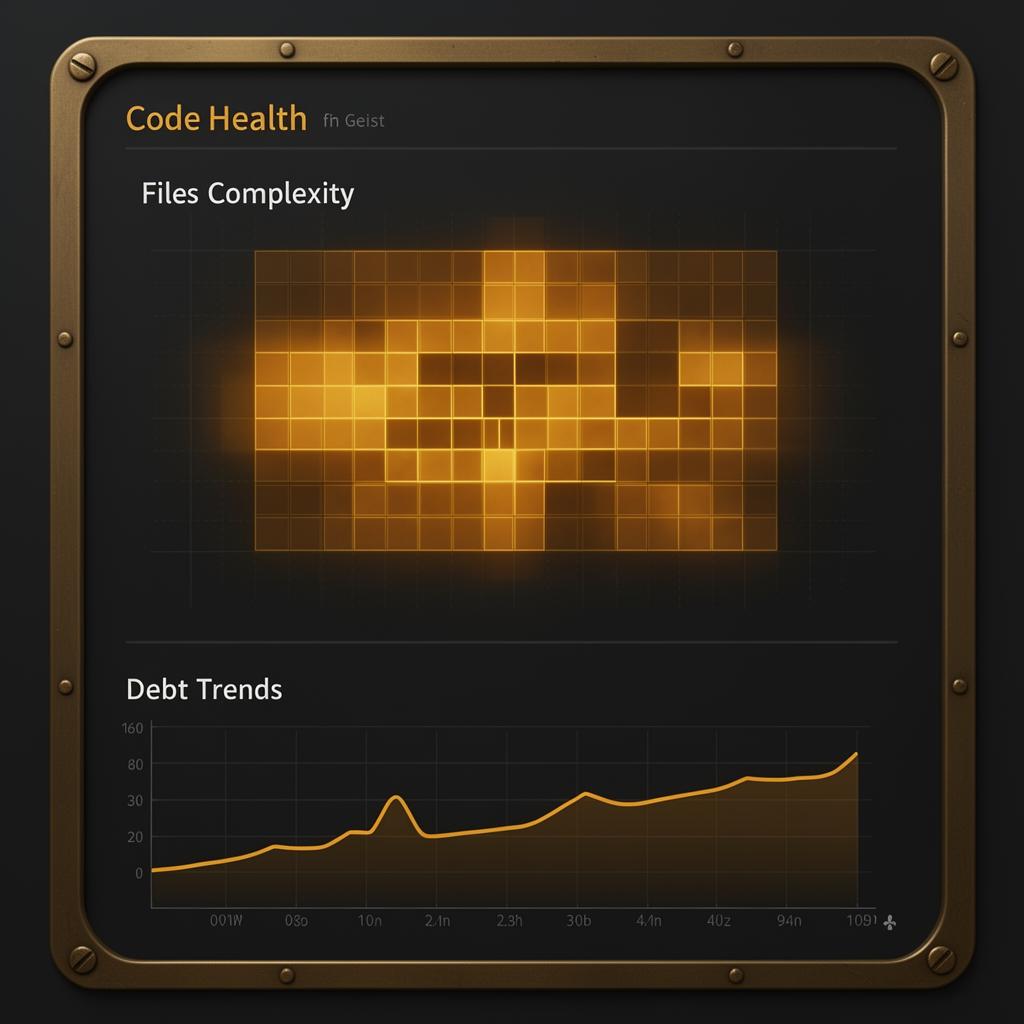
Visualized health signals
Area Heat Maps
See which modules are accumulating the most debt and changing fastest.
Debt Trend Lines
Watch whether your team is paying down or accumulating architectural debt over time.
Generated Tickets
Turn findings into prioritized tickets and agent prompts — burn down debt in small, practical increments.
Principles of the instrument
Code Radar is not a scoring shame machine. It is a calm, configurable instrument that helps your team see what was previously invisible.
Transparent
Every finding shows its work: what was scanned, which rules fired, and the evidence behind the call.
Simple to read
Clear themes, concrete examples, practical next steps. Readable by ICs and engineering leaders alike.
Highly configurable
Rules, schedules, severity, scope, model providers — bring your own standards and your own taste.
Quiet presence
Connects in seconds, observes in silence, reports on schedule. No noisy notifications.
Teams that ship more code than they can personally read.
- ›Agentic engineers delegating implementation and review to coding agents.
- ›Small teams where formal human review has become inconsistent.
- ›Engineering leaders responsible for long-lived codebases.
- ›Teams inheriting old systems with unclear, undocumented debt.
- ›Organizations that want monitoring without giving up control over models or rules.
Connect your repo. Let the radar keep a lookout.
Systems nominal — free for open source